LinkedIn in 2026 is the most valuable professional network for building a personal brand outside of your immediate industry circles. With over one billion registered users and an algorithm that distributes content far beyond your existing connections, it offers a reach that email lists, personal websites, and other social platforms rarely replicate for professional content. But most professionals on LinkedIn are doing it wrong: they post sporadically, write generic thought leadership, and wonder why nothing grows. This guide walks through a systematic approach to building a real LinkedIn presence that generates career opportunities, client leads, speaking invitations, and professional credibility, not just follower counts.
Start with Your Positioning Before You Post Anything
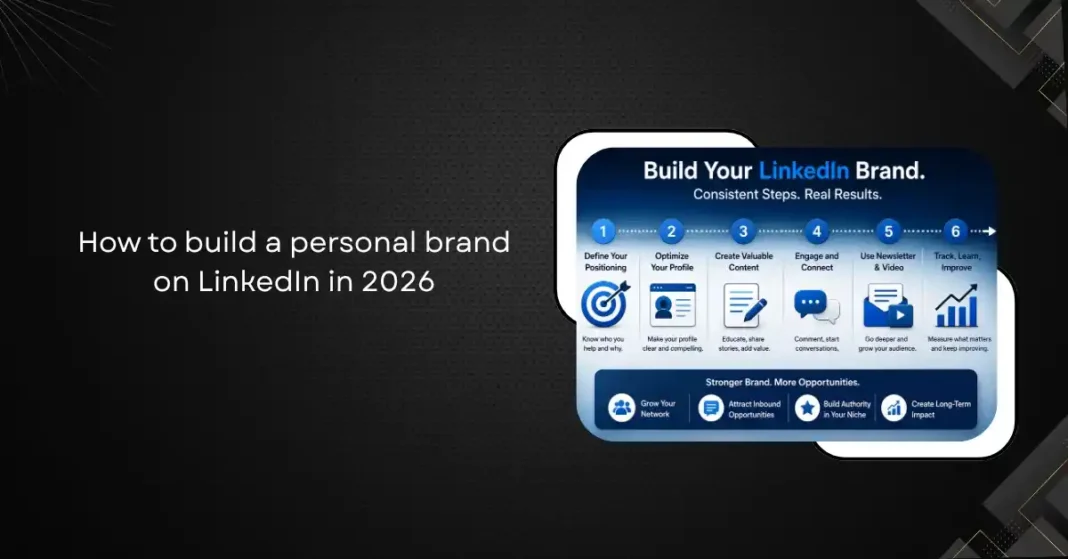
The most common LinkedIn mistake is creating content before deciding what you want to be known for. A personal brand is not a collection of things you find interesting. It is a consistent signal to a specific audience about the value you provide. Before writing a single post, you need to be able to answer three questions clearly: Who is your target audience on LinkedIn? What specific value do you provide them? What perspective or expertise do you have that is different from everyone else in your space?
The more specific your positioning, the faster your brand grows. ‘I post about marketing’ is not positioning. ‘I help B2B SaaS founders acquire their first one hundred customers without paid advertising’ is positioning. The second version immediately tells a reader whether they are the target audience and what they will get from following you. Specific positioning feels counterintuitive because it feels like you are narrowing your audience. In practice, it sharpens your appeal to the right people and accelerates growth by making your value clear.
Write your positioning statement before you optimize your profile or create your content calendar. Every other decision in this process flows from that statement.
Optimizing Your Profile as a Landing Page
Your LinkedIn profile is not a resume. It is a landing page for your personal brand. When someone encounters your content and clicks through to your profile, they are deciding in about ten seconds whether to follow you. The profile needs to immediately answer: who are you, who do you help, and why should I follow you.
The headline is the most important element. Most professionals waste it with their job title and company name, which tells a visitor almost nothing about the value they provide. A strong headline combines what you do with who you serve and what outcome you create. ‘Head of Growth at Acme Corp’ tells you nothing. ‘I help B2B founders build organic growth systems that do not require a marketing team’ tells you exactly what you need to know.
The About section has become more important in 2026 as LinkedIn surfaces it prominently in both search results and AI Overviews that reference LinkedIn profiles. Write it in first person, lead with who you help and how, include two or three concrete proof points (results you have achieved, notable clients or employers, specific expertise), and end with a clear call to action for what you want profile visitors to do. Keep it to three to five short paragraphs rather than a wall of text.
The featured section, which allows you to pin content, links, and posts to the top of your profile, should contain your single best performing post, a link to your newsletter or website if you have one, and one piece of content that demonstrates your area of expertise most clearly. This section has the highest engagement rate of any profile element because it surfaces the best of your content to every visitor.
The Content Strategy That Actually Grows LinkedIn Accounts
LinkedIn’s algorithm in 2026 rewards three types of content above all others: content that generates comments (not just likes), content that is shared to other LinkedIn feeds or messages, and video content. According to data released by LinkedIn in late 2025, video posts receive sixty-nine percent more reach on average than text-only posts, and posts that generate ten or more comments within the first hour are distributed to a substantially wider audience than equivalent posts that get likes but no comments.
The content format that consistently outperforms on LinkedIn is the short personal story or observation with a professional lesson. It starts with a specific, relatable situation (a failure, a surprise, a decision, a moment of clarity), follows the narrative arc of what happened, and ends with the insight or lesson. This format works because it triggers comments from people who have had similar experiences, and it is genuinely more interesting to read than bullet-pointed thought leadership.
A sustainable content cadence for building a LinkedIn brand from scratch is three to four posts per week. Posting every day burns out most people and often leads to lower quality. Posting once a week is too infrequent to build the algorithm momentum that accelerates growth. Three to four posts per week, each with a distinct angle or content type, is the sweet spot for consistent growth without content burnout.
The content mix that produces steady follower growth typically includes one post per week that is purely educational (a specific insight, framework, or piece of knowledge your audience needs), one post per week that is more personal (a story, a lesson from experience, a behind-the-scenes observation), one post that engages the community (a question, a poll, a reaction to an industry event), and an optional fourth that can be promotional without being aggressive (sharing a project, result, or resource).
Writing Posts That Get Read and Shared
The first line of a LinkedIn post is what decides whether someone reads the second line. LinkedIn shows the first two lines of every post before the ‘see more’ click, which means those lines determine whether most people read your content at all. The best first lines create a gap: they hint at something interesting, counterintuitive, specific, or surprising enough that the reader wants to know more. Avoid starting with ‘I am excited to share,’ ‘Hot take:’ or ‘Unpopular opinion:’ all three are now so overused that they signal generic content before the reader has read anything of substance.
Post length on LinkedIn is less important than most people think. Short posts of one to three paragraphs perform well when they have a clear, specific insight. Long posts of five to ten paragraphs perform well when every paragraph earns its place. The posts that consistently underperform are medium-length ones that feel neither tight enough to be punchy nor developed enough to be substantive.
Formatting affects readability more on LinkedIn than on any other platform. Single-sentence paragraphs separated by line breaks are harder to avoid than they should be, but the format exists because it works on mobile, where most LinkedIn reading happens. Use it for the sections of a post that need emphasis. For the narrative and explanatory sections, slightly longer paragraphs of two to three sentences read more naturally and feel more substantive.
Building Engagement Through Comments and Connections
The LinkedIn algorithm treats your comments on other people’s posts as content distribution events. When you leave a substantive comment on a well-performing post in your niche, that comment is shown to the post author’s audience alongside the post, effectively exposing your profile and thinking to a large relevant audience at no cost.
The quality of comments matters significantly. A comment that says ‘Great post!’ or ‘So true!’ adds no signal value and gets no distribution. A comment that adds a specific related insight, challenges a point constructively, or shares a relevant personal experience gets shown to wider audiences and often generates replies and connections from people who read the original post.
Spend twenty to thirty minutes per day leaving three to five substantive comments on posts from people in your target audience or from adjacent creators in your niche. This strategy, done consistently over three months, routinely drives more follower growth than posting alone, because it introduces your thinking to audiences that already know and trust the post author.
Using LinkedIn Newsletter for Long-Term Audience Building
LinkedIn’s native newsletter feature, introduced in earlier years and significantly upgraded in 2025 and 2026, has become one of the most effective long-term brand building tools on the platform. When someone subscribes to your LinkedIn newsletter, they receive a notification and email for every issue, similar to a traditional email newsletter, but within the LinkedIn ecosystem.
The advantage over external newsletters (Substack, Beehiiv, and similar tools) is distribution. LinkedIn surfaces newsletter recommendations to relevant users based on topic and audience match, which means a newsletter on LinkedIn can attract subscribers who would never find an external newsletter. For building an audience from scratch, that algorithmic distribution is a meaningful accelerant.
The strategic use of a LinkedIn newsletter is to go deeper on your area of expertise than individual posts allow. Where a post covers one insight in three hundred words, a newsletter issue can cover a topic thoroughly in one thousand to two thousand words with examples, frameworks, and practical guidance. The combination of regular short posts and a periodic deep-dive newsletter creates two reasons for your target audience to follow you and builds more durable credibility than either format alone.
Video Content on LinkedIn in 2026
LinkedIn video has shifted significantly in the past twelve months. Short-form vertical video (similar in format to TikTok or Reels) is now promoted more aggressively by LinkedIn’s algorithm than the longer, horizontal talking-head videos that dominated earlier years. Videos between thirty seconds and two minutes with captions consistently outperform longer videos in both reach and engagement metrics.
The most effective LinkedIn video format for personal branding in 2026 is the quick insight: a single specific observation, framework, or lesson delivered directly to the camera in sixty to ninety seconds, with captions for the majority of viewers who watch without sound. Production quality matters less than clarity and specificity. A well-lit smartphone video with clear audio and a specific point outperforms a polished studio video that is vague.
One video per week, combined with three to four text posts, is a strong rhythm for creators who find video approachable. For creators who find video uncomfortable, starting with one video per two weeks and increasing the cadence as comfort grows is more sustainable than forcing a pace that produces poor content.
Measuring What Matters
The metrics that tell you whether your LinkedIn brand is actually growing are: follower growth rate week over week, comment rate on posts (comments divided by impressions, not absolute numbers), and inbound inquiries (messages from people who found you through your content). Vanity metrics like total impressions and total reactions are useful for identifying which content format performs best, but they do not tell you whether you are building a brand that generates real professional outcomes.
Review your metrics monthly rather than post-by-post. Single post performance varies too much to draw conclusions from individual results. Looking at monthly trends in follower growth, average comment rate, and the types of inbound messages you are receiving gives you a much clearer picture of whether your positioning, content mix, and engagement strategy are working.
A LinkedIn brand built consistently over twelve months, using the approach described here, typically reaches a follower base of two thousand to ten thousand relevant connections, a steady stream of inbound messages from ideal-fit prospects or collaborators, and a level of professional recognition in the target niche that translates into career and business opportunities. That timeline is longer than most people want to hear, but shorter than the time it takes to build the same recognition through most other channels.