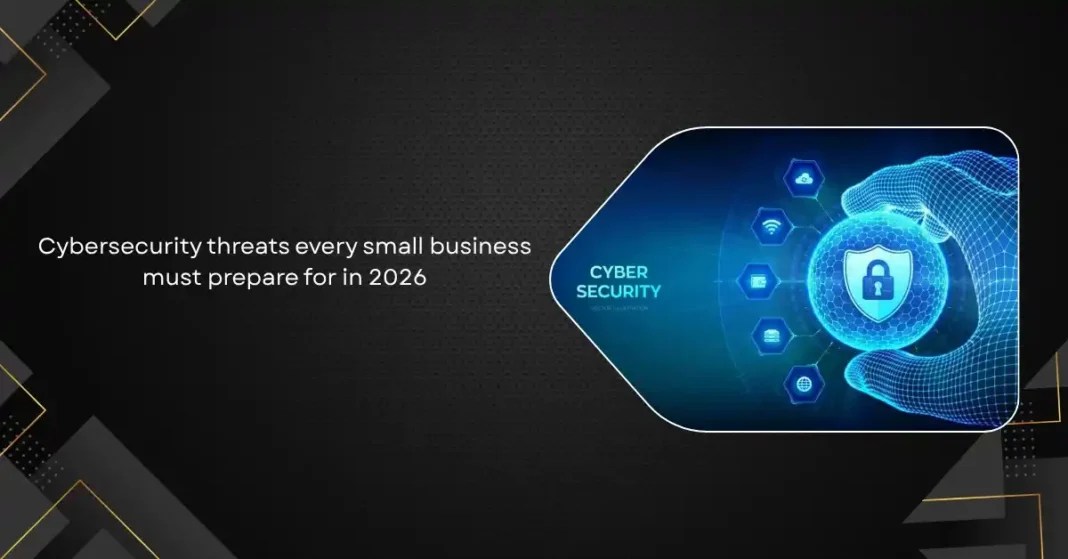
Small businesses used to operate under the assumption that cybercriminals were focused on large enterprises with bigger paydays. That assumption was always questionable and in 2026 it is definitively wrong. Ransomware gangs, phishing operations, and AI-powered social engineering attacks now specifically target organizations without dedicated security teams because the defenses are weaker and the success rate is higher. The Foxconn ransomware attack in early 2026, attributed to the Nitrogen gang and resulting in 11 million stolen files including data linked to Apple, Nvidia, Google, and Intel, demonstrates that supply chain exposure can compromise major brands through vendors they trust. A small business in that supply chain is an attack surface for the entire ecosystem around it.
Ransomware: Still the Biggest Financial Threat
Ransomware is now the most financially destructive cyber threat facing small businesses. Attackers encrypt business data and demand payment for the decryption key, with ransom demands for small businesses typically ranging from $5,000 to $100,000. Even when businesses pay, data recovery is not guaranteed. The FBI advises against paying ransoms because payment does not guarantee recovery and funds further attacks. The Nitrogen gang, responsible for the Foxconn breach, operates through phishing-based initial access, typically a malicious email attachment or link that installs ransomware once clicked.
The most effective defense against ransomware is not antivirus software, which catches known variants but misses novel ones. It is offline backup. A 3-2-1 backup strategy, three copies of data on two different media types with one copy stored offsite and disconnected from the network, means that a ransomware attack loses its leverage entirely. If you can restore from a clean backup, you have no incentive to pay the ransom. Small businesses that implement this single practice reduce their ransomware exposure more than any other technical control.
AI-Powered Phishing and Voice Deepfakes
Phishing attacks have become significantly more convincing in 2026 because attackers now use generative AI to write personalized emails that mimic the writing style of trusted contacts. Standard phishing training, which teaches users to spot generic suspicious emails, is less effective against AI-crafted spear-phishing that references real details about the target organization. Voice deepfakes take this further: attackers clone a senior executive’s voice using publicly available audio and call finance teams requesting urgent wire transfers. Several small businesses have lost significant sums to this specific attack pattern in 2025 and 2026.
The defense is procedural rather than technical. Any financial request over a threshold, regardless of who it appears to come from, should require verification through a secondary channel that is independent of the original communication. A call that appears to be from the CEO requesting a transfer should be verified by calling the CEO back on a number from the company directory, not the number the call came from. Implementing this as a written policy and training all staff on it takes hours and costs nothing.
Credential Attacks and Password Security
Most small business breaches begin with compromised credentials. A username and password stolen from a data breach at one service is tested against business accounts at other services in automated attacks called credential stuffing. If an employee uses the same password for their personal email and their work systems, a breach at any service they use is a potential entry point into the business.
Multi-factor authentication is the single most effective technical control against credential-based attacks. Implementing MFA across all business accounts, particularly email, banking, and cloud services, makes stolen passwords significantly less useful to attackers. Password managers eliminate password reuse by generating unique credentials for each service. Both are free or low-cost and implementable in hours. The percentage of small business breaches that would have been prevented by MFA alone is substantial.
Supply Chain and Third-Party Risk
As the Foxconn breach illustrated, your cybersecurity posture is only as strong as your most vulnerable vendor connection. Small businesses that provide services to larger organizations inherit some of their clients’ threat exposure. Assessing which third-party software and services have access to your systems, restricting permissions to the minimum necessary, and monitoring for unusual access patterns are supply chain security practices that have moved from enterprise to small business necessity.
The Practical Starting Point
Small businesses do not need a large security budget to meaningfully reduce their risk. The highest-impact steps are: enable MFA on all accounts, implement offline backup with tested recovery procedures, establish written protocols for financial requests, keep all software updated to remove known vulnerabilities, and train staff on phishing recognition annually. These steps address the attack vectors responsible for the majority of small business breaches. A cyber insurance policy adds financial protection for the incidents that get through despite good defenses. The combination of basic controls and insurance coverage provides adequate protection for most organizations operating below enterprise scale.