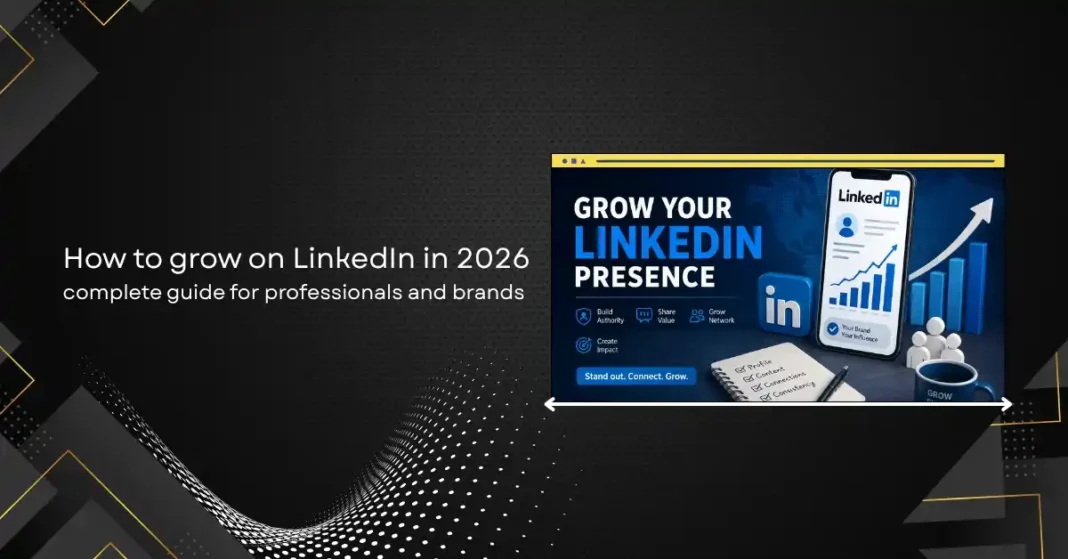
Growing on LinkedIn in 2026 is harder and more rewarding than it has been in years. Harder because average organic reach is down 50% from 2025 levels, engagement has dropped 25%, and the platform’s algorithm now penalizes a wide range of tactics that used to work. More rewarding because LinkedIn now has over 1 billion members, 40% of whom interact with professional content weekly, and the platform’s audience is more commercially valuable per user than any other social network. The professionals winning on LinkedIn right now are posting less frequently, with higher quality, and operating in full alignment with how the algorithm actually works in 2026.
Start with Your Profile, Not Your Content
Before a single post, your profile needs to do one thing clearly: tell a visitor exactly who you are and what you offer within three seconds. Your headline should lead with your role, not your job title. The About section should explain the specific problems you solve for a specific type of person. Your featured section should contain your best evidence of that expertise: case studies, articles, results. Profile completeness correlates with algorithmic distribution. LinkedIn’s system treats a well-constructed profile as a signal of genuine professional intent and rewards it with broader initial post distribution.
Content Strategy: Quality Over Volume
Post 2 to 3 times per week maximum. The algorithm hides your previous post when you publish a new one, so daily posting at lower quality reduces the distribution of each individual piece. Each post needs roughly 24 hours of uninterrupted distribution time to reach its potential audience. Posting again before that window closes cuts the reach of the post you are replacing.
The content mix that drives growth in 2026: personal professional experience and lessons (highest engagement, strongest connection growth), original data and research (highest save rates and document engagement), framework or process posts that give readers a reusable tool, and contrarian or nuanced takes on conventional professional wisdom. What does not work: inspirational quotes, reposted graphics from other platforms, overly promotional brand messaging, and content that could apply to any professional in any field.
The Formats That Work
Document posts (PDF carousels) produce 6.1% average engagement, the highest of any LinkedIn format. A document that distills a framework, checklist, case study, or research finding into 5 to 10 slides gives readers a reason to swipe, save, and share. That combination of behaviors signals high value to the algorithm and extends distribution significantly. If you have valuable knowledge that you would normally put in a long blog post, the LinkedIn document format distributes it more effectively within the platform.
Native video delivers a 69% performance boost when your face or brand appears in the first four seconds. Keep professional videos between 90 seconds and 3 minutes for organic posts. Start with a specific claim or insight rather than an introduction. The first 3 to 5 seconds determine whether a viewer stays or scrolls. LinkedIn Live generates 24 times more engagement than standard posts for accounts that can sustain live format production. Text posts work well for short, punchy observations and stories. Keep them under 1,200 characters for the highest reach. Avoid external links in any format; the 60% reach penalty is real and not worth taking.
Building Engagement That Compounds
Your first 60 minutes after posting are critical. LinkedIn tests your post with 2 to 5% of your network. How that group engages determines whether the algorithm distributes it wider. Only 5% of posts that underperform in the first hour recover to broader audiences. This means being active immediately after posting, responding to early comments, and having your most engaged connections see the post early. Engaging meaningfully with other professionals in your niche for 15 minutes before you post primes those accounts to see your content when it goes live.
Commenting on others’ posts with genuine insight, not generic agreement, builds your visibility to their audiences and signals to the algorithm that you are an active, contributing professional. The reply-to-like ratio on your own posts matters. A post with 30 thoughtful comments outperforms one with 300 likes in terms of algorithmic distribution. Ask questions that generate specific responses rather than yes/no answers. The depth of the conversation, not its volume, is what the algorithm measures.
Personal Profile vs Company Page
Personal profiles receive 561% more reach than company pages in 2026. If you are a founder, executive, or individual professional, your personal profile is your primary distribution channel. Company pages remain useful for job postings, advertisements, and institutional credibility, but they should not be the primary content vehicle for a growth strategy. Employee advocacy programs, where individuals share company perspectives from their personal profiles, outperform company page distribution by a substantial margin. LinkedIn is a network of people. Content that reads like a person wrote it and posts under a person’s name reaches more people than identical content posted under a brand.