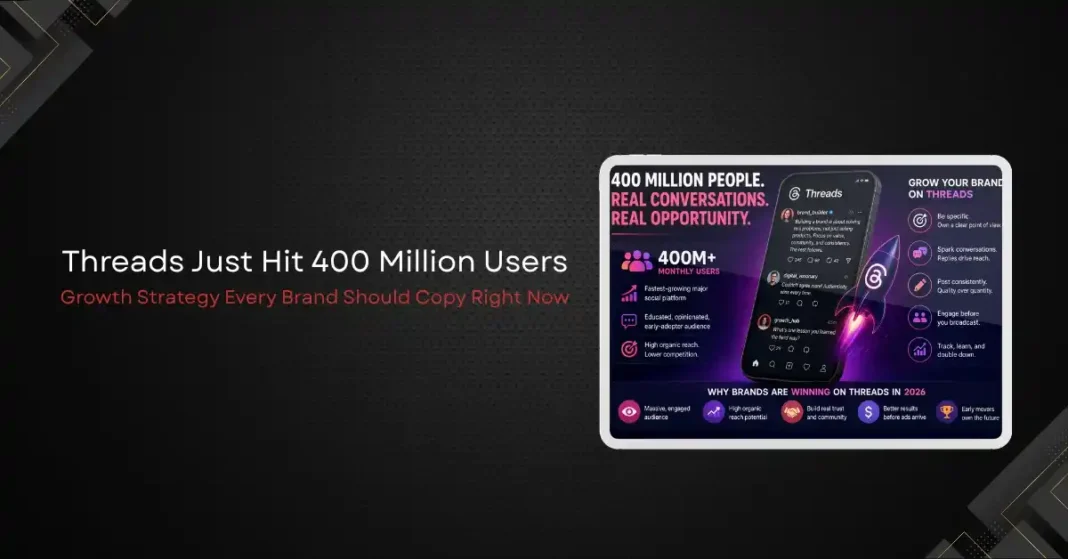
When Meta launched Threads in July 2023, the tech press wrote it off as a desperate attempt to poach a disgruntled Twitter audience. Two years and some change later, that analysis looks embarrassingly short-sighted. Threads has crossed 400 million monthly active users, making it one of the fastest social platforms to reach that milestone in the history of the internet. And yet most brands are still treating it as an afterthought, posting content recycled from Instagram and wondering why nothing lands.
That is a mistake. The brands quietly building presence on Threads right now are tapping into something real: an audience that is educated, opinionated, early-adopter-friendly, and genuinely tired of the dysfunction that has defined X since Elon Musk bought it in 2022. This piece breaks down how Threads got to 400 million users so fast, what the platform actually rewards, and the specific growth tactics that are working for brands in mid-2026.
How Threads Got to 400 Million Users
The first version of Threads was messy. It launched without a desktop app, without a following feed, and without a search function. By most product standards, it was incomplete. What it did have was a login that used your existing Instagram account and a moment in time when millions of advertisers, journalists, and creators were actively looking for an exit from X.
Meta moved faster than anyone expected. By the end of 2023, Threads had a web interface. By early 2024, the algorithmic feed had been refined, and ActivityPub federation meant Threads posts could appear in Mastodon and other decentralised networks. By 2025, the platform had introduced Trending Topics, an improved keyword search, and post analytics that finally gave creators something to work with.
The 400 million figure, disclosed by Meta CEO Mark Zuckerberg in a post in May 2026, represents monthly active users rather than registered accounts, which is an important distinction. A platform can inflate registered counts easily; monthly actives are harder to fake and more meaningful for advertisers. The number puts Threads ahead of Snapchat and Pinterest in the global active-user rankings and in direct competition with X, which has fluctuated between 350 and 400 million active users throughout 2025 and 2026 depending on the measurement methodology.
What drove the growth was not one thing. It was a combination of Instagram’s 2 billion-plus user base acting as a constant recruitment pipeline, a steady stream of X controversies sending waves of users looking for alternatives, and Meta’s product team shipping improvements at a pace that surprised industry observers. The federated identity system mattered too: early adopters valued the idea that their Threads handle was portable in a way that Twitter handles never were.
Why Brands Are Still Underestimating Threads
Ask most social media managers about Threads and they will say something like: ‘We have an account but we are still figuring it out.’ That hesitation is understandable. Threads does not yet run paid advertising, which means there is no commercial pressure from Meta’s ad sales teams to push brands onto the platform. Without ad products, marketing teams have limited budget justification. Without budget justification, Threads gets the B-team content strategy.
The problem with that approach is timing. The brands that built early on Instagram before its algorithm became crowded and expensive now have audiences that are worth tens of millions of dollars. The brands that joined LinkedIn early, when organic reach was still generous, now have hundreds of thousands of followers they did not have to pay for. Threads is in that pre-crowded window right now. The algorithm still rewards new accounts. The feed still shows content from accounts you do not follow. The cost of building is as low as it will ever be.
There is also a demographic argument. Threads skews toward users who are 25 to 45, college-educated, and digitally literate. That is a valuable audience for almost any B2B or premium consumer brand. The platform’s tone is conversational and text-forward, which means brands that have something interesting to say have a natural advantage over brands that primarily produce polished visual content.
The Content Formats That Threads Actually Rewards
The Threads algorithm in 2026 is not identical to Instagram’s. It does not simply promote posts with high engagement rates. Several other factors matter, and understanding them changes how you should think about content.
First, reply-driving posts outperform likes-driving posts. Threads was designed around conversation, and the algorithm reflects that. A post that gets 50 replies will generally reach more new accounts than a post that gets 200 likes and no replies. This means the best-performing brands on Threads are posting things that invite disagreement, questions, or strong reactions rather than things that are easy to scroll past and double-tap.
Second, text outperforms images on Threads in ways that would surprise Instagram marketers. Long-form text posts, those that use Threads’ 500-character limit across multiple interactions or that make a single well-argued point in one go, consistently generate more shares and saves than image carousels. This is not because Threads penalises images; it is because the audience on Threads came there to read and discuss. Give them something to read.
Third, posting frequency matters less than posting quality. The brands seeing the strongest growth on Threads are not necessarily posting every day. Some of the fastest-growing brand accounts post three to five times a week and achieve strong reach because each post is genuinely interesting rather than filler. The platform is not YouTube, where upload frequency is tightly correlated with algorithmic distribution.
Fourth, following and engaging with creators before they follow you back is still an effective growth tactic. Threads’ discovery feed still surfaces accounts based on engagement patterns, so a brand that is actively commenting on relevant conversations will appear in the feeds of people who follow those conversations. This is old-school community management, but it works here in a way that it stopped working on Instagram years ago.
Case Studies: What Actual Brand Growth Looks Like on Threads
Several brands have built notable followings on Threads by treating the platform differently from their other channels.
Patagonia’s Threads account posts almost exclusively text. Not marketing copy, but the kind of direct, opinionated commentary on environmental and business news that the brand’s founders have always made in interviews but that tends to get softened on Instagram. On Threads, the brand takes positions. That directness drives conversation, which drives reach.
Duolingo, which has built one of the most recognised brand voices in social media, uses Threads for the kind of absurdist in-character posts that started on TikTok but find a slightly different audience on Threads. The brand’s Threads account grew to over 1 million followers faster than any of its other platforms because the audience on Threads is more likely to appreciate the self-aware, meta quality of the humour.
For B2B brands, the opportunity is even cleaner. Notion’s Threads account consistently posts about productivity thinking, software philosophy, and behind-the-scenes product decisions. Those posts generate high-quality replies from the exact audience Notion wants: knowledge workers who care about how they work. The brand’s Threads following is smaller than its Instagram following but significantly more engaged and more likely to convert.
The Growth Strategy: A Practical Framework
If you are building a Threads presence from scratch in mid-2026, the strategy that is working for most brands has four phases.
The first phase is positioning. Before you post anything, decide what you are specifically going to talk about on Threads that you cannot or do not talk about elsewhere. Threads rewards specificity. A financial services brand that posts general money tips will be ignored. A financial services brand that posts direct, sometimes uncomfortable observations about how retail investors make decisions will build a following. The more specific and honest your positioning, the faster the algorithm will find you an audience.
The second phase is seeding. For the first two to four weeks, spend more time replying to other accounts than posting your own content. Find the five to ten accounts in your space that already have engaged followings. Reply to their posts thoughtfully. Not with marketing messages, but with actual opinions or information. This is how you get your account in front of an audience before you have any of your own.
The third phase is content rhythm. Once you have a sense of what lands, establish a sustainable posting schedule. Most brands find that three to four posts per week is enough to maintain algorithmic momentum without burning out the content team. Each post should have a clear point. Not a list of things, but one thing stated clearly and directly.
The fourth phase is conversion. Threads does not yet have strong link-click functionality; posts with external links tend to underperform posts without them. This means the conversion strategy for most brands is not ‘post link, get click’ but rather ‘build trust through conversation, convert through bio link or direct message.’ Treat Threads more like a relationship-building channel than a traffic channel and the economics start to make sense.
What Comes Next for Threads
Meta has been clear that advertising is coming to Threads, though the timeline has shifted several times. The most recent signals from the company suggest that a self-serve ad product will launch in late 2026 or early 2027, starting with sponsored posts in the main feed.
When ads arrive, two things will happen simultaneously. Brands with existing organic followings will have the option to amplify posts to much larger audiences. And the feed will become more competitive, which means organic reach for new accounts will decline. This is the standard social media maturity curve, and Threads is not exempt from it.
The implication for brands is straightforward: the window for cheap organic growth on Threads is open right now and will not stay open forever. Every month that a brand delays building a Threads presence is a month of compounding organic reach lost.
There are also signs that Threads is beginning to invest in creator monetisation tools, including a subscription feature that would let Threads users pay for access to exclusive content from specific accounts. If that rolls out broadly, brands that have built large, engaged followings will have a new revenue option that did not exist when they started.
Common Mistakes to Avoid
The brands that are struggling on Threads tend to make the same errors. They cross-post Instagram content without adaptation, treating Threads as a syndication channel rather than a distinct platform. They post promotional content too early, before they have built any goodwill or audience trust. They focus on follower counts rather than reply counts, which misses what the algorithm actually rewards. And they abandon the platform after a few weeks of slow growth without giving it the time it needs to build momentum.
The most important thing to understand about Threads is that it is not a reach channel yet. It is a relationship channel. The brands that are winning on it right now are the ones that show up consistently, say things worth reading, and treat the replies section as an opportunity rather than an obligation.
Four hundred million users is a proof point, not a ceiling. Threads has room to grow significantly before it reaches the scale of Instagram or Facebook, and the algorithmic distribution for new accounts is still generous by the standards of mature platforms. That combination, real audience and real organic reach, is rarer than it sounds. Most brands will wait until ads launch to take Threads seriously. The brands that do not wait will be very glad they did not.
Final Thoughts
The story of Threads is not really about Meta’s ambitions or X’s decline. It is about what happens when a social platform gets the product right and the timing right at the same moment. Threads got lucky with timing, inheriting a migration wave from X. But it kept those users by building a product worth staying for.
For brands, the lesson is the same one that recurs every time a new platform reaches critical mass: show up early, show up consistently, say something worth reading. The brands doing that on Threads right now are building something that will be significantly harder and more expensive to build in two years. That is reason enough to start.