Key Takeaways
- “Rank #1” and “get cited” are no longer the same goal. Nearly half of AI Overview citations come from pages ranking below position 5.
- Organic click-through rate drops sharply (some studies show a 61% fall) on queries where an AI Overview appears, but getting cited inside one earns more clicks than a normal ranking alone.
- E-E-A-T (Experience, Expertise, Authoritativeness, Trustworthiness) is now the single most scrutinized quality signal, with genuine first-hand experience mattering more than ever.
- Semantic completeness, whether your content fully answers a question without needing another click, correlates strongly with AI Overview selection.
- Traditional signals like domain authority still matter for eligibility, but they no longer guarantee citation once you’re in the pool.
- Technical health (Core Web Vitals, crawlability, mobile performance) is table stakes, not a differentiator.
Introduction
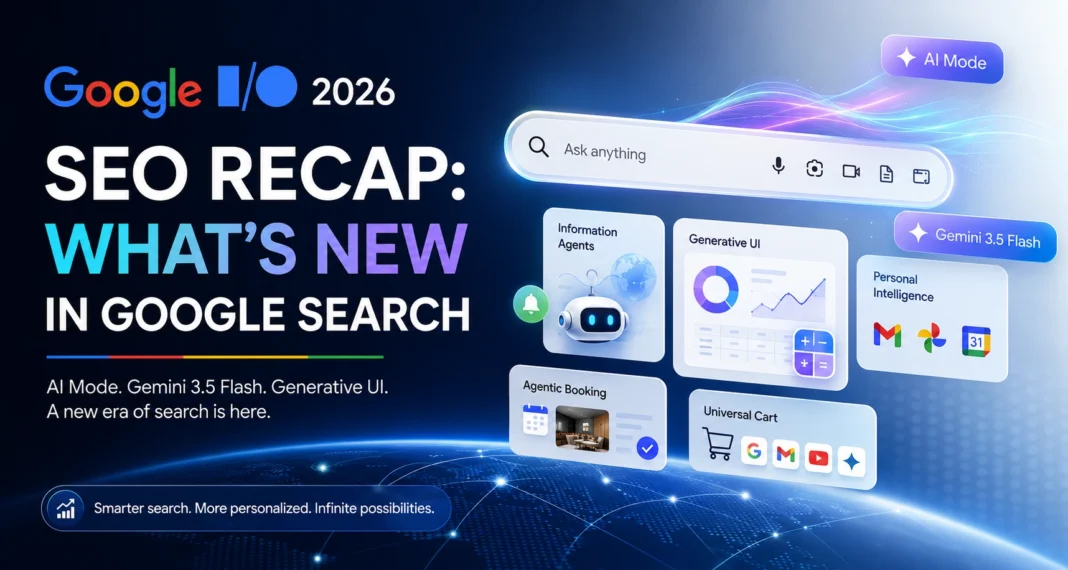
The title isn’t really fair to SEO, and you’ll see why by the end of this. But it captures something true: the version of SEO built around “get to position #1 and the traffic follows” doesn’t work the way it used to. In 2026, AI Overviews appear on roughly half of all searches, and a huge share of the pages they cite were never sitting at the top of the traditional results. So if you’re still measuring success by blue-link position alone, you’re tracking the wrong scoreboard.
Here’s what’s actually driving visibility on Google right now, and what to do about it.
The Shift: From Ranking to Citation
Search Engine Land tracked AI Overviews cutting organic click-through rate on affected queries from around 1.76% to 0.61%, a steep drop. But there’s a real upside if you can get cited inside the AI Overview itself: cited pages earn noticeably more organic and paid clicks than competitors that show up in the traditional list but get skipped by the AI summary.
The uncomfortable part: citation and ranking position have become only loosely connected. Multiple analyses in early-to-mid 2026 put a large share, sometimes close to half, of AI Overview citations coming from pages ranked below position 5, some even outside the top 10 entirely. Google’s retrieval-augmented generation pipeline is pulling passages based on trust and content quality signals, not strictly on where a page sits in the traditional ranking.
What Actually Determines Citation and Ranking in 2026
1. E-E-A-T Is the Top Quality Filter
Experience, Expertise, Authoritativeness, and Trustworthiness has become the most heavily scrutinized signal for most content types. In practice, this means:
- Experience — did the person writing this actually do the thing they’re describing?
- Expertise — visible author bios, credentials, and consistent coverage of a topic.
- Authoritativeness — other trusted sites and sources referencing you.
- Trustworthiness — HTTPS, transparent sourcing, updated content, and a real editorial presence.
Generic, experience-free writing increasingly gets filtered out. Surveys show a large majority of users say they distrust content that “feels AI-generated,” and Google’s systems have gotten noticeably better at spotting it too.
2. Semantic Completeness
This is one of the strongest predictors of whether a page gets pulled into an AI Overview: can your content give a complete, self-contained answer without requiring the reader to click somewhere else for context? Content that scores high here is dramatically more likely to be selected than content that only partially answers the question and expects a follow-up click.
Practically, that means leading each key section with a direct answer, not burying it under three paragraphs of throat-clearing.
3. Topical Authority Over Single-Keyword Wins
Ranking for one keyword on one page matters less than demonstrating deep, consistent coverage of an entire topic. Google increasingly evaluates content quality at the site level through systems like the Helpful Content System, not just page by page. A single excellent article on a thin site won’t carry the same weight as the same article published by a site with genuine topical depth.
4. Technical Health Is Now the Baseline, Not the Differentiator
Core Web Vitals, crawlability, HTTPS, and mobile-first performance haven’t gone away, they’ve just stopped being a way to stand out and become a minimum bar. Google’s evaluation of Core Web Vitals shifted toward treating LCP, INP, and CLS as a combined score rather than separate pass/fail checks, meaning a page that fails even one of the three now takes a bigger hit than before. Since most Google searches happen on mobile, and AI Overviews appear heavily there too, a page with mobile rendering issues is structurally disadvantaged before content quality even enters the picture.
5. Structured Data: Helpful, Not Magic
Schema markup (Article, FAQ, HowTo) still helps Google parse and extract your content reliably, which does increase citation likelihood. But it’s explicitly a supporting factor, not a guarantee. Piling on schema without underlying content quality won’t move the needle much on its own.
6. Freshness and Real-Time Verification
Content updated recently, with cross-referenced, verifiable facts, has an edge in fast-moving topics. Some analyses found a meaningful share of AI Overview-featured content was updated within the last month, suggesting Google’s systems weight recency more heavily than they used to for certain query types.
7. Local and Entity Signals
For local queries, Google Business Profile remains one of the most powerful visibility levers, since it’s structured data that’s actively crawled and feeds both Maps and AI features directly. Consistency of your business details across the web (name, address, hours, categories) matters more in an AI-driven search environment because these systems triangulate across multiple sources rather than trusting one.
What’s Changed vs. What Hasn’t
Still true:
- Content quality, relevance, and genuinely helpful answers remain the foundation.
- Backlinks and brand mentions still build authority, just weighted differently than in a pure link-count model.
- Technical SEO (site speed, crawlability, HTTPS, mobile usability) is still required, just not sufficient.
Changed:
- Position #1 no longer guarantees citation in AI-generated answers.
- Domain authority alone correlates far more weakly with AI Overview selection than it used to.
- Pages ranking outside the traditional top 10 can still win citations if they score well on semantic completeness and trust signals.
- Measurement has to expand beyond rank tracking to include citation frequency and AI-referred traffic.
Common Mistakes to Avoid
- Chasing rank position as the only KPI. A page can sit at #2 and still be invisible in the AI Overview above it.
- Publishing unedited AI-generated content. Readers and Google’s systems are both getting better at spotting content with no lived experience behind it.
- Treating schema as a silver bullet. It supports extraction; it doesn’t replace quality.
- Ignoring mobile performance. Most searches, and most AI Overview appearances, happen on mobile.
- Writing content that requires a click for context. Low semantic completeness gets skipped over in favor of self-contained answers.
Practical Checklist
- Lead every important section with a direct, complete answer in the first couple of sentences.
- Add real author bios with visible credentials and a consistent topic focus.
- Fix Core Web Vitals as a combined score, don’t let one metric quietly fail.
- Keep your Google Business Profile and local citations accurate and consistent everywhere.
- Track AI Overview appearances and citation rates in Search Console alongside your normal rank tracking.
- Update high-value pages on a real cadence instead of publishing once and forgetting them.
Conclusion
“It’s not SEO anymore” is a catchy way to say it, but the more accurate version is: SEO’s fundamentals didn’t disappear, the finish line moved. Ranking well is still necessary to be eligible for citation, but it’s no longer sufficient on its own. In 2026, winning means combining real E-E-A-T, complete and extractable answers, solid technical health, and consistent topical depth, then measuring success by whether you show up in the answer, not just the list below it.
FAQ
1. Do I still need to rank #1 to get traffic in 2026? Not necessarily. A meaningful share of AI Overview citations come from pages ranked below position 5, so citation and rank position are no longer tightly linked.
2. What is semantic completeness? It’s how fully your content answers a question on its own, without requiring the reader to click elsewhere for context. It’s one of the strongest predictors of AI Overview selection.
3. Does domain authority still matter? It still helps with general trust and eligibility, but its correlation with AI Overview citation has weakened significantly compared to a few years ago.
4. Is structured data required for AI visibility? No. It supports extraction and rich results, but Google has said it isn’t required and won’t guarantee a citation by itself.
5. What’s the single most scrutinized ranking signal in 2026? E-E-A-T, particularly the “Experience” component, whether the content shows real first-hand knowledge.
6. Does AI-generated content hurt rankings? Not automatically. Google evaluates content quality, not production method, but generic, experience-free AI content tends to underperform because it lacks the depth and originality that quality systems now reward.
7. How important is mobile performance now? Very. Most searches and most AI Overview appearances happen on mobile, so mobile rendering issues create a structural disadvantage regardless of content quality.
8. What should I track instead of just rank position? AI Overview appearance and citation rate (via Search Console), branded search growth, and AI-referral traffic, alongside traditional rank tracking.